
Spanish pharmacy: the power of recommendation in the age of data
With around 22,000 pharmacies, most of them independent, Spain is a dense and fragmented market. Juan Pablo Arán, Pharma Sales Director Spain at Beiersdorf, explains how data and relationships work together in the field.
Contents
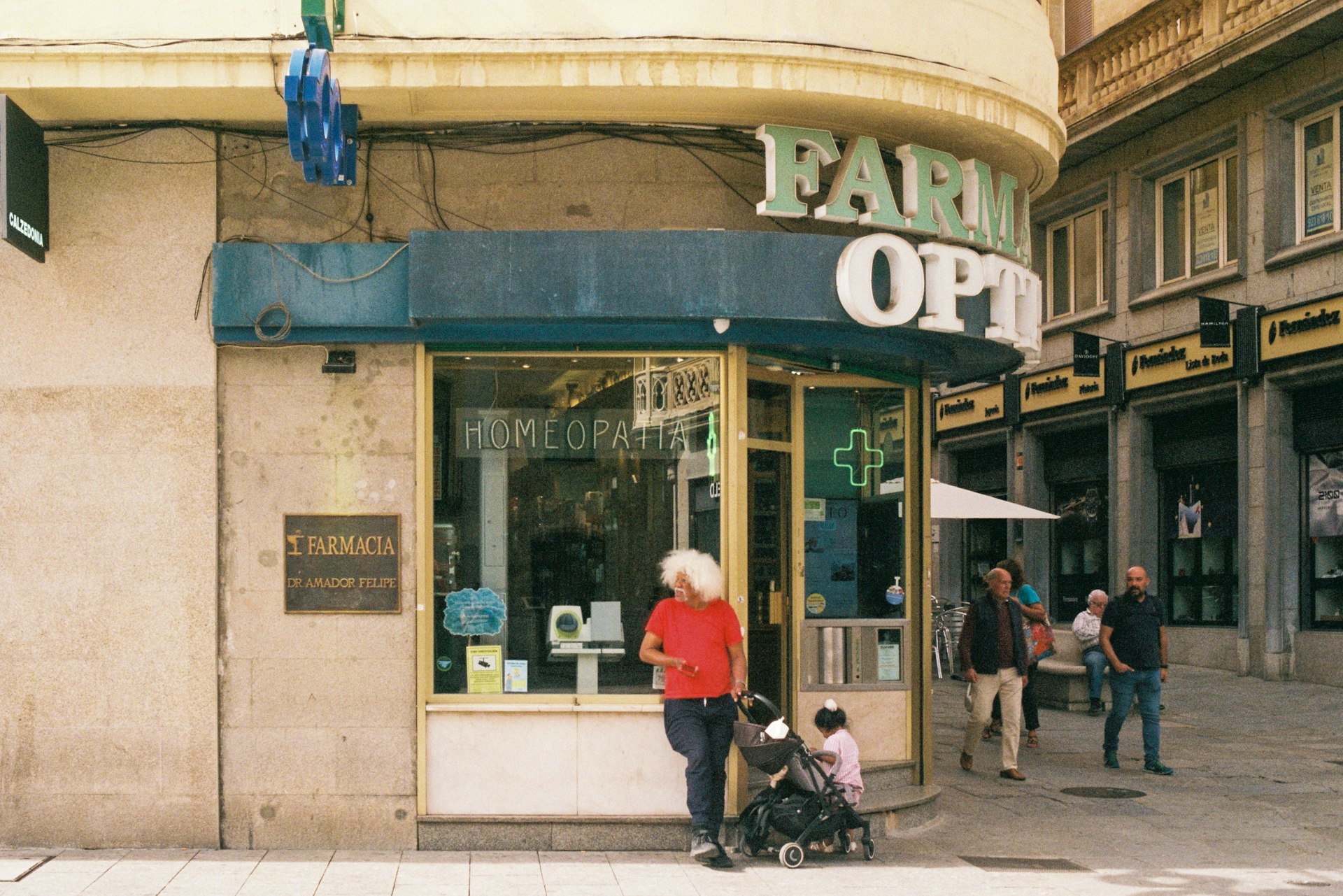
With around 22,000 pharmacies, Spain has a network comparable in size to France's, but for a noticeably smaller population. The result is a particularly dense, fragmented market that is complex to cover. For pharmaceutical companies, the challenge is clear: how do you reach a very large number of outlets, most of them independent, without oversized sales teams?
To better understand how this market works, we spoke with Juan Pablo Arán, Pharma Sales Director Spain at Beiersdorf. His perspective sheds light on a sector in full transformation, where proximity and personal relationships still carry decisive weight, while data, digitalisation and new consumer expectations are redefining the role of sales forces.
A fragmented, independent and deeply relational market
The first defining feature of the Spanish pharmacy market is its strong fragmentation. Most pharmacies are independent and run by their own owner, unlike in other countries where groups or centralised structures play a larger role. This independence forces pharmaceutical companies to adapt to a wide variety of contacts, profiles and ways of running the business.
There is no single type of pharmacist. Some keep a more scientific approach and pay particular attention to clinical evidence, composition or a product's technical backing. Others are more focused on running their business: margin, stock turnover or category development.
On top of this diversity of profiles comes an equally important territorial reality. Madrid, Barcelona and Valencia account for a very significant share of sell-out in many categories, but the rest of the market remains widely spread across the country. This capillarity complicates the route to market and forces companies to prioritise precisely where and how to act.
A pharmacy that has to reinvent itself
The Spanish pharmacy channel is undergoing a profound transformation. For years, the pharmacy held a central place in the relationship with patients and consumers. But the arrival of new competitors, particularly in the perfumery and parapharmacy channel and online, has changed the game.
Consumers now arrive far better informed. They compare prices, product ranges, availability and shopping experiences. In some categories, especially among younger shoppers, the pharmacy is no longer necessarily the first point of contact. In categories such as dermocosmetics, part of this audience has discovered products through channels offering a more visual, experiential and discovery-driven experience, very different from the traditional codes of the pharmacy.
This shift forces pharmacies to strengthen what sets them apart: proximity, trust and expert advice. For Juan Pablo Arán, Spanish pharmacists need to move from a purely scientific approach to a vision that is both scientific and commercial. This does not mean giving up their authority as healthcare professionals, but complementing it with management tools, a better understanding of the shopper, assortment development and the ability to grow categories.
From sell-in to commercial partnership
The transformation of the channel is also changing the role of the pharmaceutical sales rep. Historically, the rep or sales manager was very sell-in oriented: present the product, secure an order and ensure its presence in the pharmacy. On its own, this model is no longer enough.
Today, the manufacturer has to help the product sell through. Pharmacies expect brands not just to place products, but to help them sell more and better. That means training, recommendation, assortment advice, shelf visibility and category management.
“A pharmacy doesn't expect a product to sit still on the shelf; it expects it to sell through and contribute to the growth of the category.”
Juan Pablo Arán, Pharma Sales Director Spain, Beiersdorf
Recommendation remains the main driver of the pharmacy channel. When a consumer walks in without a clear purchase decision, the pharmacist's advice can determine the final choice. That is why training remains a key lever for manufacturers: product training, benefits, features, scientific superiority, evidence and clinical studies.
But support goes beyond the product. The sales rep has to become a partner able to help the pharmacy organise its categories, work on its visibility, identify the most profitable spaces and increase sell-out. The question is no longer just how to sell more of your own product, but how to contribute to category growth within the pharmacy.
Data, segmentation and field efficiency
In a market of 22,000 pharmacies, segmentation is essential. No manufacturer can cover the entire numeric distribution with the same intensity. That is why data has become a fundamental tool for deciding where to focus effort.
Companies work both with external data on sell-out per pharmacy and with internal data on purchases, customer trends, assortment, coverage and results. Digital analysis and tracking tools help sales teams prepare their visits more precisely and access key indicators more easily.
The goal is not to accumulate data, but to make it actionable. Information should help reps prepare each visit better: what happened at the last meeting, which objectives to pursue with this customer, how their assortment is evolving, whether there are stock-outs, which campaign to present or which priority to work on.
The way field teams are organised is changing too. Instead of older models that consisted of “sweeping” an area or a postcode, sales forces are increasingly focusing on the pharmacies with the highest potential in a given category. Lower-volume pharmacies can be served through other channels, while the field team concentrates on strategic customers.
The pharmacy channel does have one important specificity: the visit plan cannot always be completely fixed. In pharmacy, the visit often keeps a transactional dimension. If the rep needs to close revenue or handle a restock, they may have to adapt their visit plan. Efficiency requires planning, but also flexibility.
Proximity, trust and reading the data
Despite the progress of digitalisation, the Spanish pharmacy market keeps a very strong relational dimension. For Juan Pablo Arán, the pharmacy channel is one of the commercial environments where personal relationships carry the most weight. Trust between the pharmacist and the sales rep can take years to build and become a decisive asset for the brand.
This relational dimension also requires companies to look after their teams. In a market so dependent on trust, sales rep turnover can directly affect the relationship with the pharmacy. Continuity, proximity and customer knowledge remain drivers of commercial efficiency.
For sales organisations looking at Spain from abroad, the Spanish market offers a clear lesson: data tells you where to act, but the relationship remains decisive in knowing how to do it. In an increasingly digital environment, proximity, personalised recommendation and trust continue to make the difference.
Spain shows how a commercial relationship can become a collaboration aimed at mutual growth. The manufacturer brings training, data, tools and a category vision. The pharmacy brings proximity, patient knowledge and the ability to recommend. When these two dimensions align, the sales force stops being a mere push channel and becomes a genuine growth engine.
Juan Pablo Arán sums it up with a particularly telling phrase: “Distribution puts the product within the consumer's reach; recommendation is what puts it in their basket.”
As the sector transforms, this is one of the great keys to the Spanish market: combining the power of data with field intelligence, operational agility with personal relationships, and commercial vision with healthcare advice. For sales forces, the future will not be about choosing between technology and proximity, but about making them work together.


Let's talk about your sales organization
A 30-minute session with a Datakiss expert to uncover opportunities to optimize your sales organization.
In-store execution
October 22, 2026
Heading for Spain: a market to discover
Mercadona, private labels, in-store execution: Matthieu Laval (Nestlé) shares his keys to succeeding in the Spanish market.
Sales management & performance
August 7, 2024
SMART(E) objectives for field sales
Around a third of salespeople don't believe in the way their objectives are set, and think that the processes used lack transparency. Is this enough to explain

Territory design
August 6, 2024
I have done my sectorization. What's next?
Too often, the organization resulting from sales sectorization remains fixed over time and deteriorates with the ups and downs of the sales force.