Plan
Your selling time is valuable. The question is where to spend it
Business Planning centralizes every sales and marketing initiative, measures their impact on your teams' actual workload, and lets you make trade-offs before rollout.




There is a gap between strategy and the field

Demands on the sales force keep piling up: innovations, promotions, merchandising, surveys, sales initiatives. They all seem like priorities, yet their impact on workload is rarely measured.
Your teams’ time is limited. Without a consolidated view, action plans stack up until they become impossible to deliver. Business Planning measures the actual workload of every initiative and lets you simulate its impact before you commit. You plan, we secure feasibility.
Designed for leaders who decide on facts

Executive & Sales Leadership
Align sales and marketing objectives with actual field capacity, and unite your teams around a shared action plan.

National Sales Management
Check what your teams can deliver across the year, backed by measurable indicators.

Sales Ops & Commercial Excellence
Centralize initiatives, simulate scenarios, and make every trade-off objective.

Human Resources
Anticipate workload, support headcount changes, and build action plans your teams can hold.
What good planning changes
Plans your teams can own
Your action plans match actual workload and field realities. Easier to understand, easier to accept, easier to execute.
01
One team, one plan
Leadership, sales, marketing, and field teams share a common view of workload. Trade-offs become objective and priorities are shared.
02
Planning that follows your priorities
Objectives shift, the calendar moves, the roadmap changes. Rerun your scenarios and adjust your plans without starting from scratch.
03
Centralize, measure, decide
01
Centralize
Bring every sales initiative into one plan: innovations, promotions, merchandising, surveys, and field operations.
02
Measure
Quantify visits, time, and workload by territory, retailer, lever, product category, week, and rep.
03
Balance and prioritize
Compare several scenarios, assess their feasibility, and adjust your priorities before rollout.
Plan in detail
01
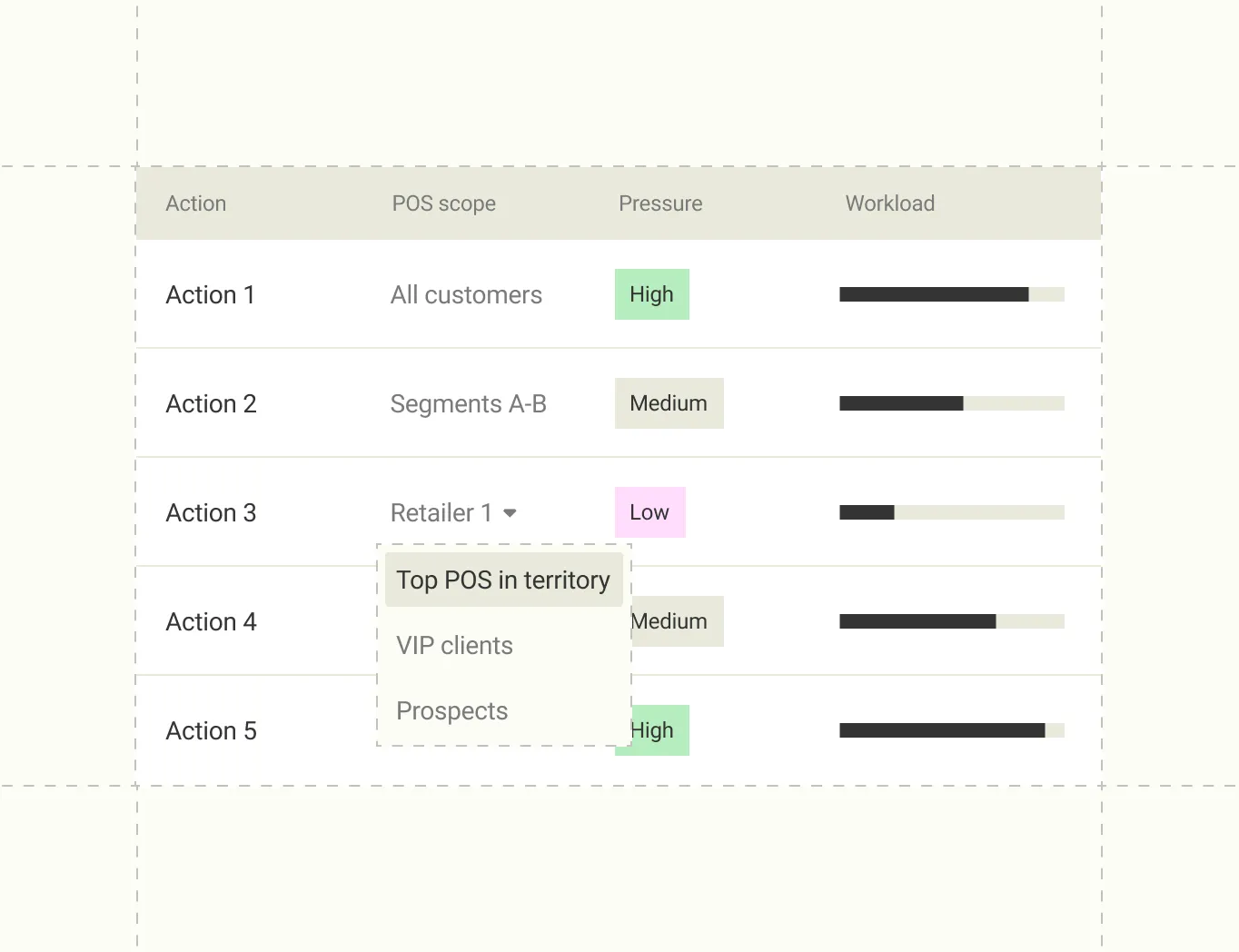
Every initiative, its scope, and its pressure
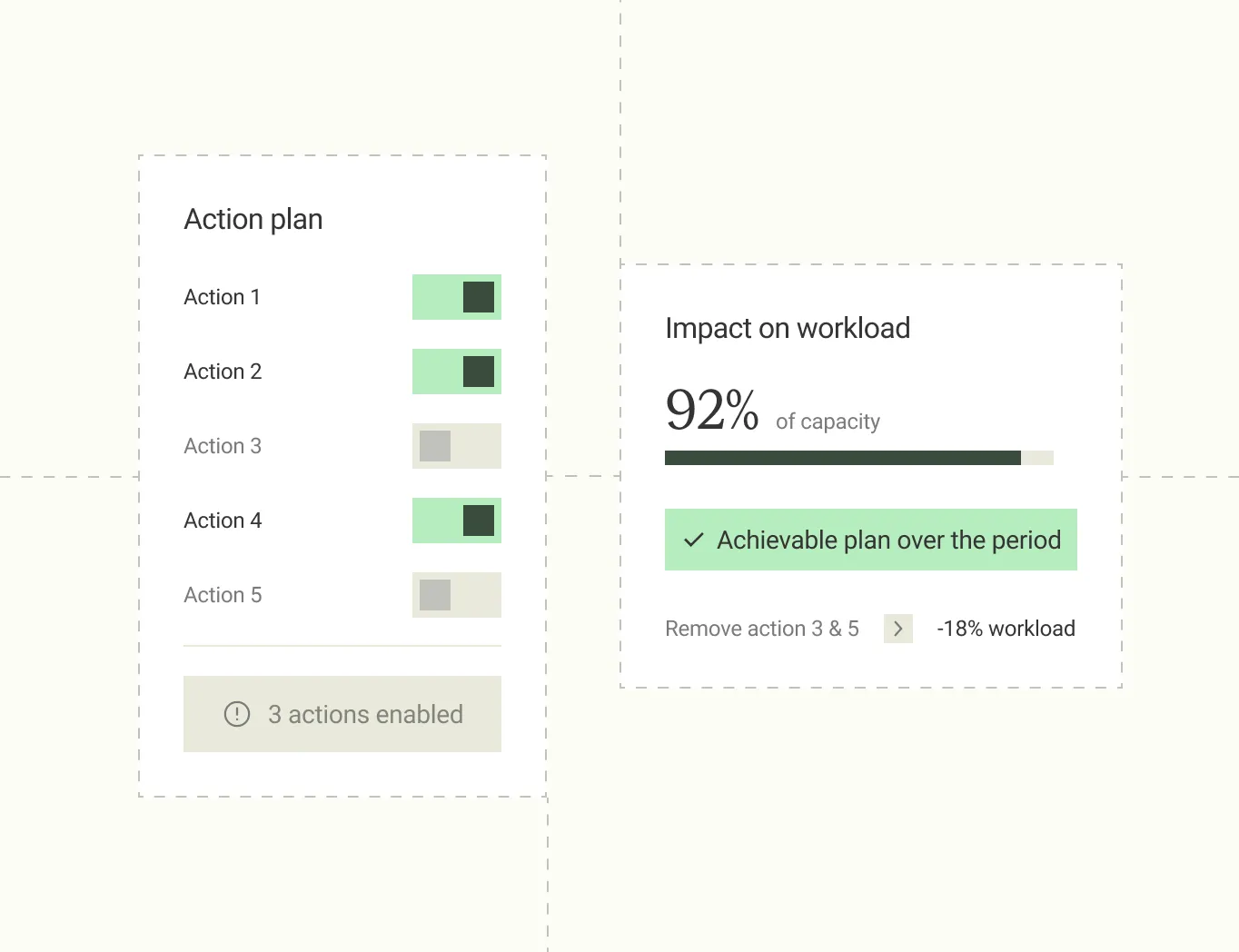
For every initiative, define the customer base concerned and the associated sales pressure. Workload is calculated from that, not from an overall estimate.
02
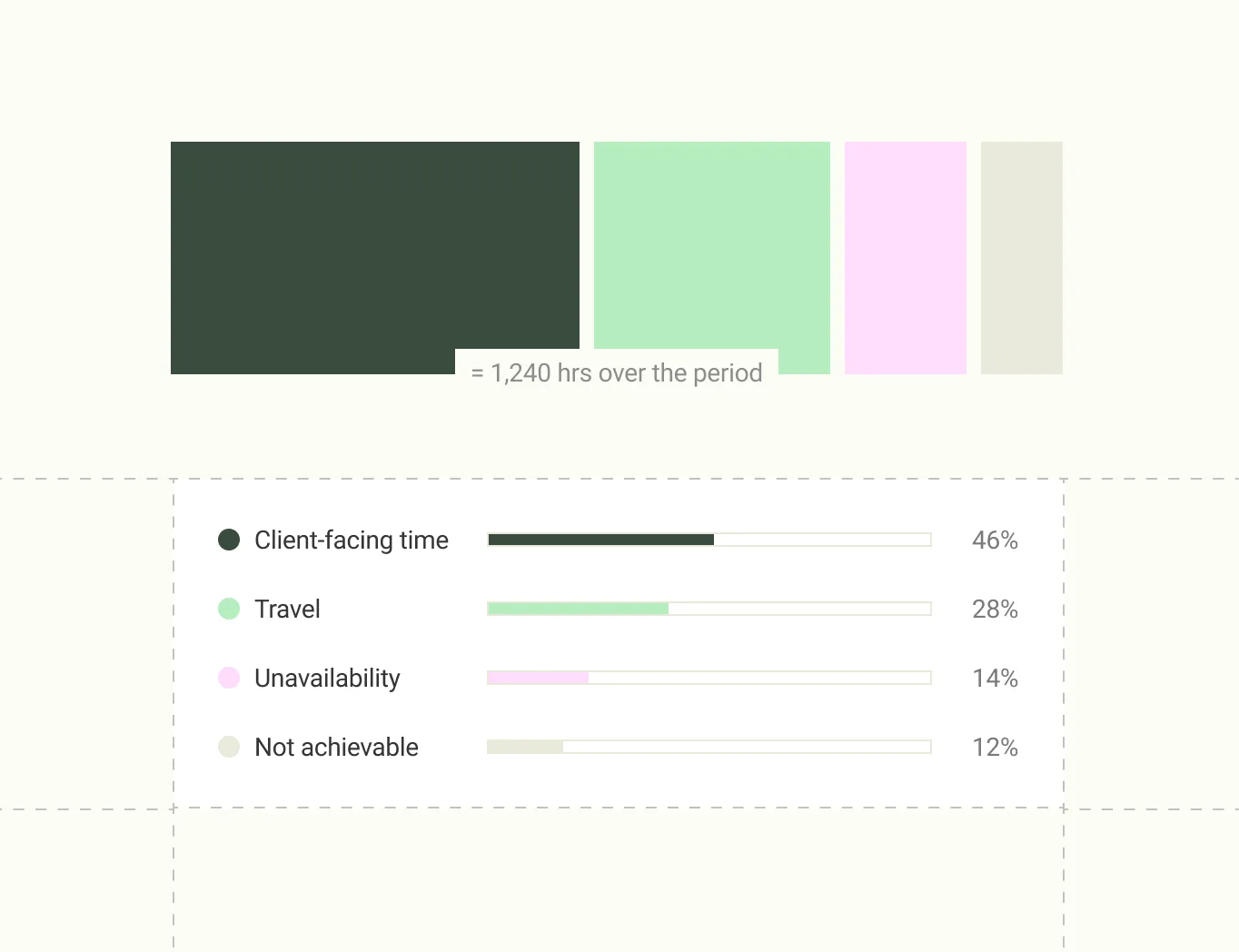
Workload you can finally measure
Travel, local specifics, actions already planned: every initiative is converted into real time. You know what is feasible before rollout, not after.
03
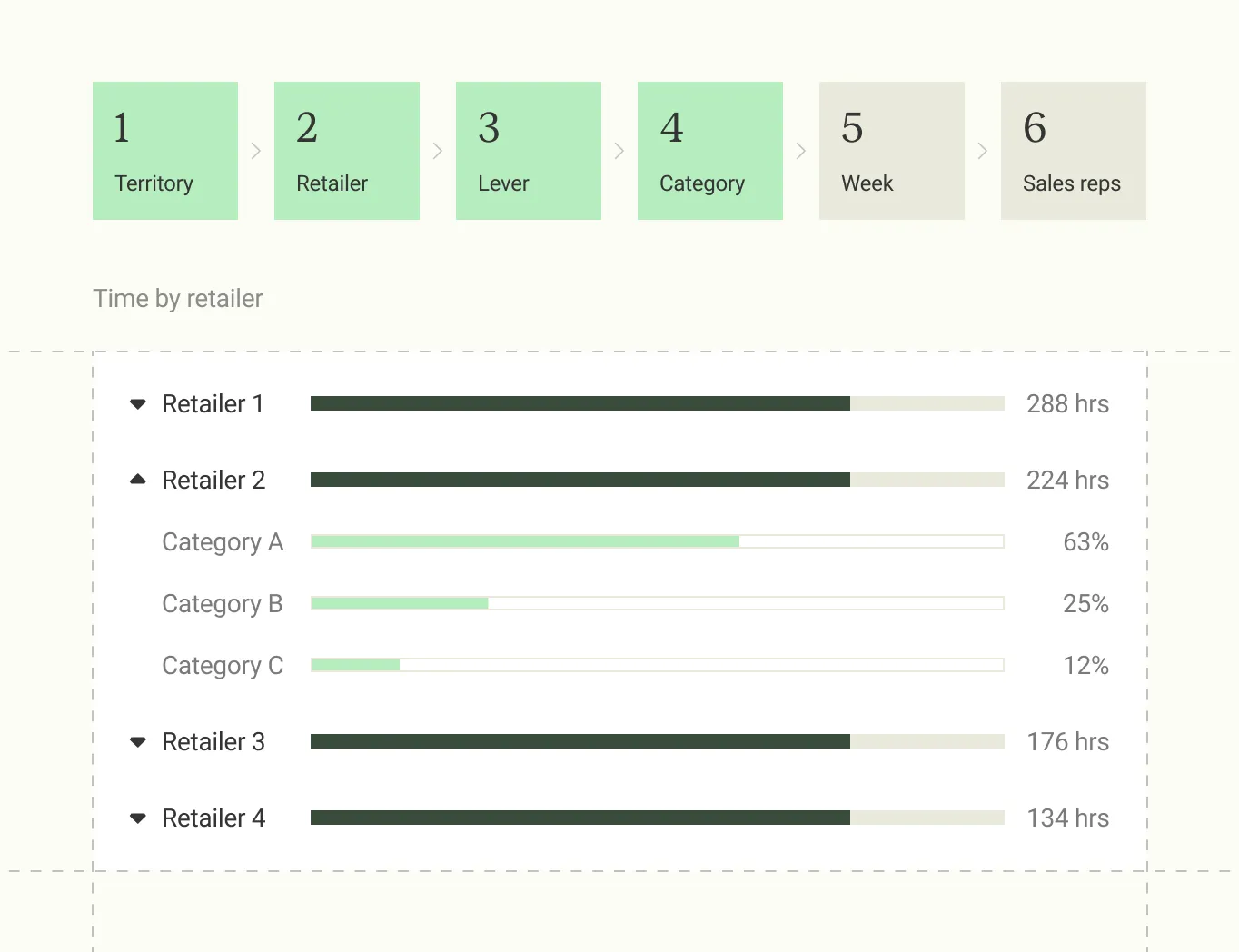
Calculation down to the detail that matters
Territory, retailer, lever, product category, week, rep: choose the level of analysis you need to see where your teams' time goes.
04
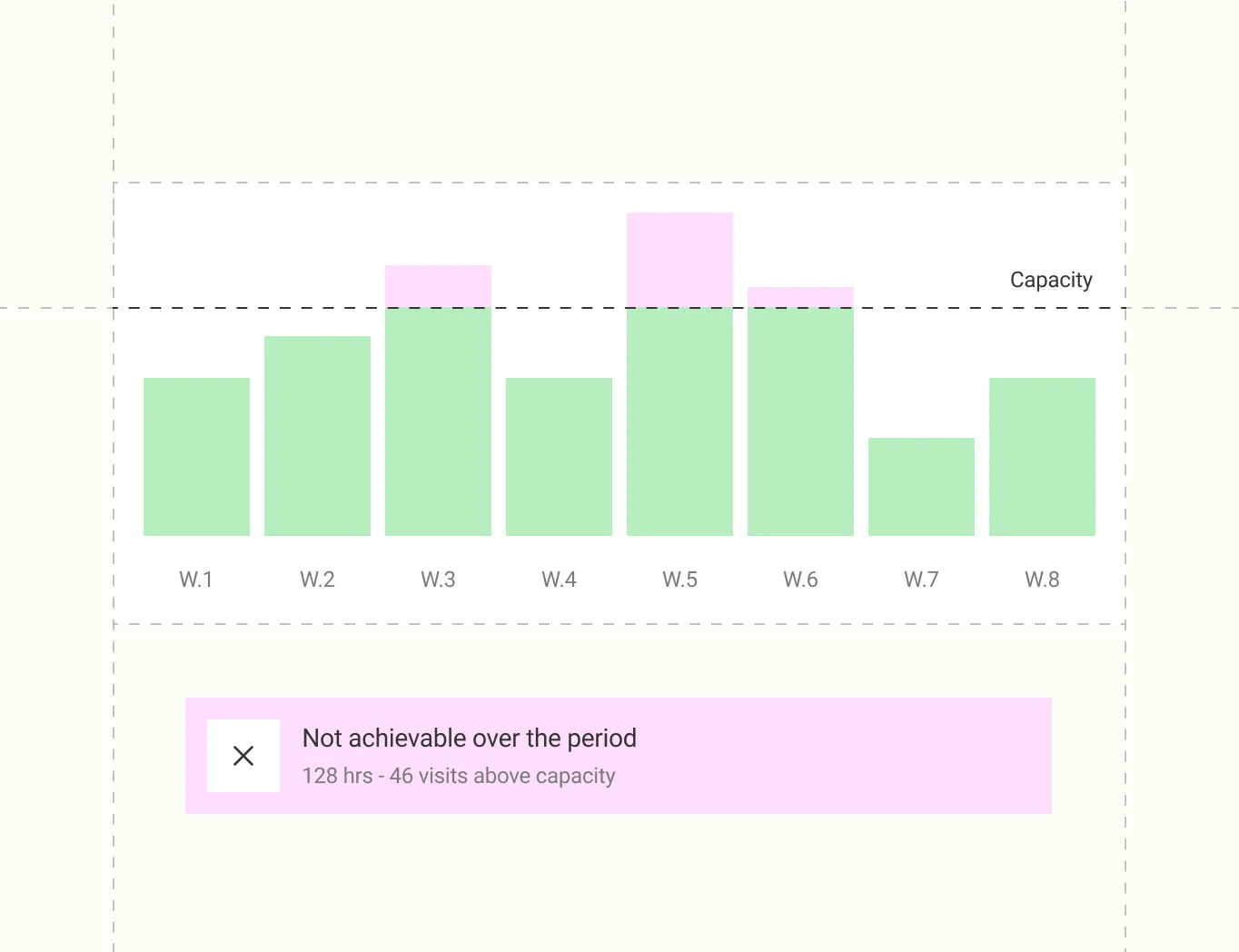
Quantify what will not fit
For every period, you get the hours and the visits that cannot be completed. Not a hunch, a figure.
05
Adjust, compare, decide
Add, move, or deactivate an initiative and see its impact on workload. Change priorities or periods and compare scenarios before you decide.
You are in control. We secure feasibility
SMB or global enterprise, the standard stays the same. You choose your level of support.
Option 01
Self-service
Test, adjust, and rerun your scenarios as often as you need, with support available whenever you want it.
Option 02
Expert-led
Our consultants challenge your assumptions and build action plans your teams can hold.
When should you use Business Planning?
01
Preparing an annual action plan
Check that your initiatives are feasible before rollout, and build a plan that balances your sales priorities.
02
Launching an innovation or a key campaign
Measure the impact of every new initiative on workload before launching it.
03
Seasonal activity or changing priorities
Recalculate your plan as the season shifts, and keep it aligned with each period.
04
Revising your roadmap
Compare scenarios and balance your priorities against your teams' actual capacity.
05
Building your visit policy
Define the actions to perform at each point of sale, then derive the visit frequency your territories require.
Frequently asked questions
What if the plan is not feasible?
Business Planning converts each initiative into workload, factoring in visit times, travel, and your teams' constraints. You see immediately which plans hold and which exceed available capacity.
Can I compare multiple scenarios?
Yes. Vary your initiatives, priorities, or time periods, then compare their impact on workload before you decide.
What data should I import into Business Planning?
Business Planning uses your sales roadmap: initiatives, periods, targets, and priorities. Importing is fast and removes duplicate data entry, even across several hundred initiatives.
How detailed can my planning be?
Business Planning breaks initiatives down to the individual rep and the week, factoring in travel times and local specifics.
Is my data secure?
Yes. Your data is hosted in France with an ISO/IEC 27001-certified provider, in a GDPR-compliant environment.


Ready to see what your plan really weighs?
30 minutes with a Datakiss specialist to see Business Planning in action.
The other pillars
Our latest resources

In-store execution
October 22, 2026
Heading for Spain: a market to discover
Mercadona, private labels, in-store execution: Matthieu Laval (Nestlé) shares his keys to succeeding in the Spanish market.

Sales planning & visits
October 22, 2026
Spanish pharmacy: the power of recommendation in the age of data
22,000 pharmacies, mostly independent: how pharma companies cover the Spanish market. Insights from Juan Pablo Arán, Beiersdorf.
Sales management & performance
August 7, 2024
SMART(E) objectives for field sales
Around a third of salespeople don't believe in the way their objectives are set, and think that the processes used lack transparency. Is this enough to explain